
How to Map B2B Content to Your Buyer’s Journey (The Hyve Framework)
Overview
Mapping B2B content to the buyer journey means understanding that buyers move through five awareness stages before they ever contact you: Unaware, Problem Aware, Solution Aware, Product Aware, and Most Aware. Each stage requires different content built around a different psychological position. The process starts with a deep ICP map covering pain points, limiting beliefs, and desired outcomes.
Keyword research and manual scraping of Google, ChatGPT, and Perplexity validate the exact questions your buyers are already asking. Those questions get categorized by awareness stage so every piece of content has a specific job. LinkedIn, YouTube, and written articles then distribute that content across the channels where your buyers are actually paying attention.
Your Content Isn't the Problem. Your Process Is.
You've published content before. Blog posts, LinkedIn updates, maybe a few videos. And you've watched them land softly, gather a few likes from peers, and produce zero pipeline impact. So you concluded that content doesn't work for your type of business, or that your audience doesn't engage with it, or that you need a bigger following before it starts to matter.
None of that is true. The content isn't broken. The process behind it is.
According to Gartner, B2B buyers now spend only 17% of their total buying time in direct contact with potential vendors. That means roughly 80% of the buying journey is happening without you in the room. Your buyers are researching, self-educating, forming opinions, and building shortlists long before they ever reach out. If your content isn't showing up in those moments with the right message for where they are in that process, you are being eliminated from deals you never knew existed. Brixon
The fix isn't to publish more. It's to build a system that places the right content in front of the right buyer at the right moment in their decision. That's what this framework does.
Phase One: Psychological ICP Mapping Before Topic Selection
The most common mistake in B2B content is skipping straight to topic selection. You pull a few keyword ideas, guess what your audience probably cares about, and start writing. The result is content that feels generic because it was built on assumptions, not intelligence.
The first phase of the Hyve framework is psychological ICP mapping, and it goes significantly deeper than company size and revenue stage. What you're after is the internal experience of your buyer:
What they're afraid of and what they believe to be true about their problem
Their limiting beliefs preventing them from making a change
Common objections that stall your deals
What success would actually feel like to them.
That means mapping pain points specifically, not in broad strokes. It means identifying the burning questions they're typing into Google at midnight. It means understanding the limiting beliefs that make them hesitate, the objections that stall deals before they start, and the dream state outcome that made them start searching for a solution in the first place.
This matters because content that resonates doesn't describe a problem in general terms. It names the exact experience your buyer is having right now. When a founder reads something and thinks "this is exactly what's happening to me," that recognition is not accidental. It's the product of doing this work first.
The psychological map you build in phase one becomes the creative brief for everything that follows. Every content topic, every hook, every angle you choose later is drawn from what you learn here. Skip this step, and you're guessing. Do it, and every piece of content you produce is built on what your buyer is already thinking.
Phase Two: Ditch the Funnel. Think in Awareness Stages.
Top of funnel, middle of funnel, bottom of funnel. You've heard this framing a hundred times. The problem is that it's too blunt to actually guide topic selection. It tells you roughly where someone is, but it doesn't tell you what they believe, what they need to hear, or what kind of content would actually move them forward.
“Hyve maps content to five awareness stages instead: Unaware, Problem Aware, Solution Aware, Product Aware, and Most Aware.”
Each stage reflects a specific psychological position your buyer is in, and each one calls for a completely different type of content.
An Unaware buyer
Doesn't know they have a problem yet. They're not searching for your service. They're searching for symptoms, trends, or outcomes that are already affecting their business. Content for this stage names that experience and connects it to a deeper problem they haven't framed yet.
A Problem Aware buyer
Knows something is wrong but doesn't know what the solution looks like. Content here educates and reframes. It helps them understand the nature of the problem and why their current approach isn't working.
A Solution Aware buyer
Knows solutions like yours exist but hasn't evaluated them. Content at this stage introduces your approach, explains how it works, and begins differentiating your method from the alternatives.
A Product Aware buyer
Has already heard of you or is actively evaluating you alongside other options. Content here handles objections, provides proof, and gives the internal champion the ammunition they need to justify the decision to a CFO or leadership team.
A Most Aware buyer
Is ready to act. They need a clear, low-friction next step and reassurance that they're making the right call.
The reason this matters for B2B content strategy is nuance. When you know exactly which awareness stage a buyer is in, you can select a topic that speaks directly to their current mental position rather than one that either talks above their head or bores them with things they already know. Research from 6sense shows that the vendor already on a buyer's shortlist at first contact wins the deal roughly 80% of the time. Content mapped to the earlier awareness stages is how you get on that shortlist before your competitor does. 6sense
Phase Three: Keyword Research That Finds What Buyers Are Already Asking
Once the psychological map is built and the awareness stages are defined, you need to validate your assumptions with real search data. This is where keyword research comes in, and the goal here is not to chase high-volume keywords for their own sake. It's to find the specific terms your buyers are already using when they search for answers to the problems you just mapped.
At Hyve, the keyword research phase uses tools like Ahrefs to surface the exact queries your ICP is entering into search engines. For founder-led content, that means looking at terms like "founder led content," "b2b content strategy," "YouTube for b2b agencies," and "content marketing for SaaS" to find where real search demand exists.
The search volume and competition data tell you two things: whether a topic is worth pursuing, and whether you have a realistic chance of ranking for it.
The insight that comes out of this phase shapes the entire content roadmap. You stop writing about what you think your audience wants to read and start writing about what they are provably, measurably searching for right now. That shift alone separates content that compounds in search from content that exists in a vacuum.
Phase Four: Scraping Google, ChatGPT, and Perplexity for Validated Questions
Keyword tools give you search volume. But the most specific, usable content ideas come from somewhere else: the actual questions your buyers are already asking AI and search engines right now.
In phase four, Hyve manually scrapes Google's People Also Ask section, Perplexity, and ChatGPT by entering the core terms surfaced in phase three and studying what comes back. When you type a query into ChatGPT or Perplexity, those tools reveal the sub-questions they used to construct their answer.
That's a direct signal of what your buyer's full thought process looks like. Google's People Also Ask section shows you the adjacent questions real users are searching for within the same topic. Together, these two inputs give you a list of validated questions, meaning topics that real buyers are actively looking for answers to, not questions you invented and hoped were relevant.
This step matters because it closes the gap between what you assume your audience cares about and what they are actually searching for at volume. Recent data shows that 94% of B2B buyers now use large language models during their purchase process. That means your buyers aren't just Googling anymore. They're asking AI. And if your content isn't the source those AI tools are drawing from, you're invisible in a research channel that is growing faster than any other. Scraping these platforms manually ensures your content is built on what your buyers are already doing, not what you think they should be doing. Corporate Visions
Phase Five: Categorizing Questions Into Awareness Stages
By the end of phase four, you have a list of validated questions. The next step is organizing them. Each question maps to a specific awareness stage, and placing it correctly determines what kind of content you build around it and what job that content is meant to do.
A question like "why is my content not generating leads" belongs in the Problem Aware stage. The buyer knows something is wrong but hasn't diagnosed it yet.
A question like "how does founder-led content shorten sales cycles" belongs in the Solution Aware stage. They understand the problem and are now evaluating approaches.
A question like "how does Hyve build a YouTube content strategy" belongs in the Product Aware stage. They're evaluating specific providers and want to understand the methodology.
The categorization step prevents one of the most common failure modes in B2B content marketing: publishing in only one layer. A lot of B2B teams create content that speaks exclusively to buyers who are already close to a decision.
But the buyers who will close six months from now are sitting at the Unaware or Problem Aware stage today. If your content doesn't reach them there, someone else's will. If you're unsure where a question belongs, AI tools can assist with categorization. But the framework itself is simple: the earlier the awareness stage, the more the content is about the problem and its consequences. The further along, the more it's about your approach and your proof.
Phase Six: Choosing the Right Channel for Each Stage
The final phase is matching your validated questions to the channel where your buyer is most likely to engage with them. For B2B founder content, three channels consistently outperform everything else: LinkedIn, YouTube, and written articles.
LinkedIn rewards concise posts that speak directly to a pain point.
YouTube is the channel for depth, educating and pre-handling objections the way a sales conversation used to, without anyone from your team in the room.
Written articles provide long-form search visibility that compounds over time.
The strategic unlock is that all three reinforce each other. A LinkedIn post drives awareness. The YouTube transcript feeds a written article that ranks in Google and surfaces in AI search tools. One core question becomes a content asset that reaches the same buyer across multiple touchpoints. When Hyve applied this approach to its own brand, organic traffic grew by 793% and unique visitors increased by more than 1,000%.
How Hyve Builds This for B2B Founders
If your content isn't mapped to a process like this, the gap isn't awareness. It's time, system, and infrastructure.
Hyve's GTM Video Content Engine runs this exact process for founders who have the expertise but not the bandwidth to build it themselves. The work starts before a single piece of content is produced. Hyve extracts the psychological ICP map, identifies the objections stalling deals, and builds a content roadmap across every awareness stage. Scripting, production, distribution, and performance tracking are handled from there.
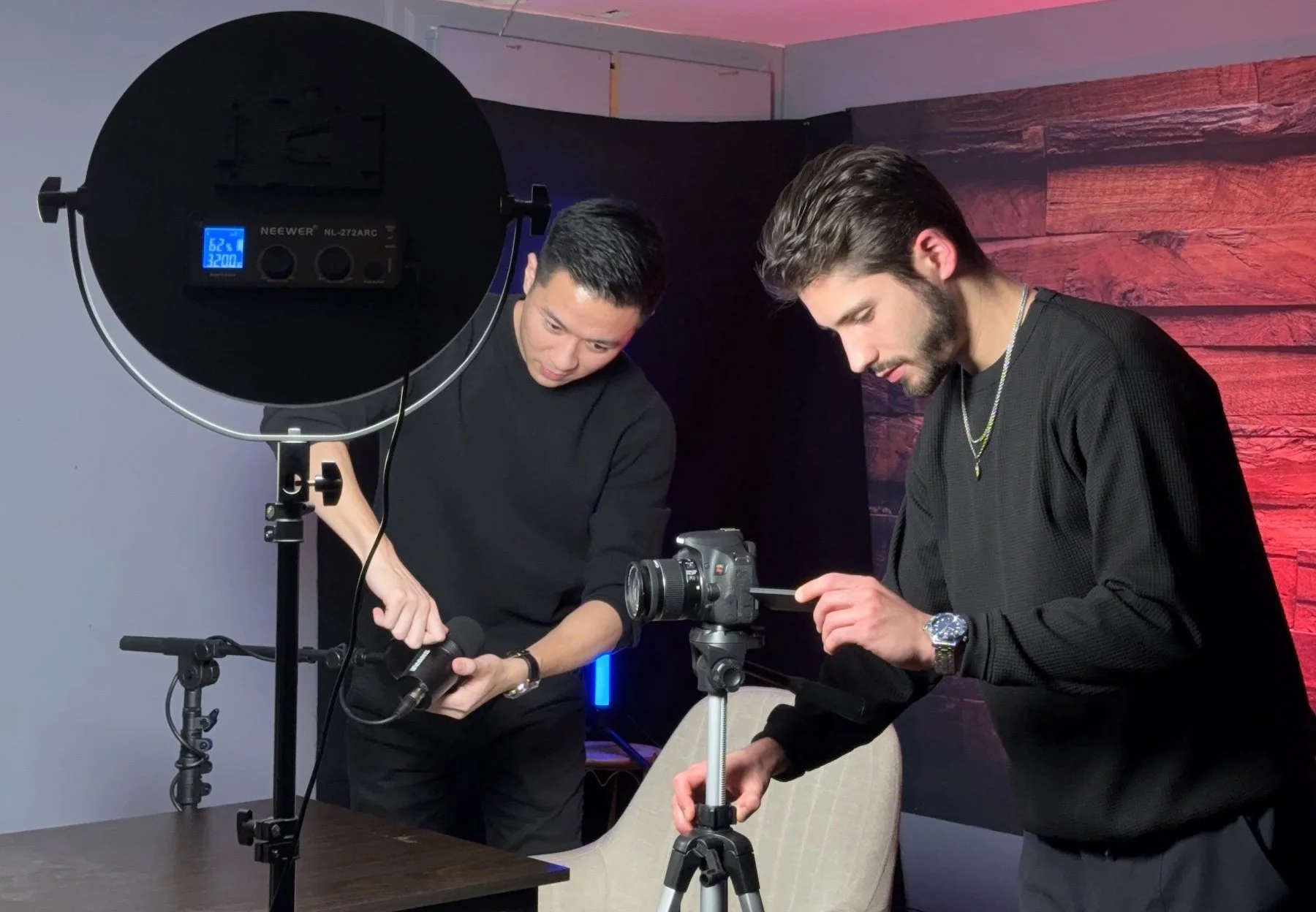
What separates the GTM Video Content Engine from a traditional content agency is that every creative decision connects back to a specific job in the buyer journey. A video isn't produced because it seemed relevant. It's produced because a specific buyer at a specific awareness stage has a specific question, and answering it on camera is the most efficient way to move them toward a decision.
RevSync came to Hyve with five YouTube subscribers and one video. One month into the engagement their channel produced 2,400 engaged viewers and 71.6 hours of cumulative watch time. Their sales team reported spending significantly less time re-explaining objections because the content had already handled them.
Conclusion
The cost of staying in the old model is real. Every month your buyers are researching, forming opinions, and building shortlists without encountering your brand or your perspective. That's not a marketing problem. It's a pipeline problem that compounds quietly over time.
Curious how this could work for your business?
Designed for B2B Founders…
Your Entire Video Content Engine—
Built, Managed, & Published For You.
Become Known, Trusted,
& Chosen in Your Industry
Record For 2 hrs/mo & Launch Your First Video in 30 Days
FAQS
-
A sales funnel describes where a buyer is in your process. Awareness stages describe where a buyer is in their own thinking. The distinction matters because content built around awareness stages speaks to the buyer's internal experience, not the seller's pipeline stage, which is why it resonates and converts at a higher rate.
-
The topic and channel they used to find you are your best signals. A buyer who found your content through a broad educational search is likely in the Unaware or Problem Aware stage. A buyer who searched your company name or watched several of your videos in sequence is likely Product Aware or Most Aware. Design your content to serve each stage and let the buyer self-select based on where they are.
-
Keyword tools show you search volume for existing terms. AI tools reveal the full question structure your buyer is working through, including the sub-questions and adjacent concerns that standard keyword data misses. Combining both gives you a more complete picture of what your buyer actually wants to understand before they make a decision.
-
The initial setup, including the psychological ICP map, awareness stage framework, and keyword research, typically takes a focused two to four hour block. Once built, the framework guides content decisions for months without needing to be rebuilt from scratch. The ongoing content creation is what requires the system to run it efficiently.
-
Yes. Start with the channel where your buyers are most active and where you have the most confidence. The framework still works with a single channel. What matters is that your topics are mapped to awareness stages and validated through real search data. The multi-channel distribution amplifies the impact, but the process itself is valuable even if you start with one outlet.
